How to Shortlist Interns When 100+ Students Apply
100 applications. 1 internship opening. Where do you even start?
Hiring an intern sounds simple until your inbox is flooded with resumes.
Some candidates have impressive certificates. Others have creative portfolios. Many claim the exact same skills.
And suddenly, finding one good intern becomes a full-time task.
Here's the problem: More applications don't necessarily mean better hiring decisions. A stronger screening process does.
Whether you're a startup founder, HR manager, or business owner, here's how to shortlist interns efficiently without overlooking promising talent.
1. Start With the Basics, Not the Resume Design
Before evaluating candidates, define what the internship actually requires.
Ask yourself:
- What tasks will the intern handle?
- Which skills are essential from day one?
- Is the opportunity remote, hybrid, or on-site?
- What is the expected availability?
- What will the intern learn and contribute?
Pro tip: Separate must-have requirements from nice-to-have skills. Don't reject a promising student just because their resume looks less polished.
Clear eligibility criteria make the first screening round faster and more consistent.
2. Look for Skills, Not Just Certificates
A resume filled with certifications can look impressive.
But here's a better question:
Can this candidate actually do the work?
For example:
Hiring a Marketing Intern?
Look for sample campaigns, content ideas, or college marketing projects.
Hiring a Graphic Design Intern?
Review their portfolio, creativity, and understanding of layouts.
Hiring a Sales Intern?
Look for communication skills, research ability, and confidence in explaining a solution.
Relevant projects often provide more useful evidence than an unsupported list of skills.
3. Use a Short, Role-Specific Challenge
This is where your screening process becomes more meaningful.
Instead of asking every applicant generic questions, give shortlisted candidates a small, relevant task.
Examples:
Marketing Intern: Suggest three Instagram content ideas for a brand.
Research Intern: Compare two competitors and summarize key differences.
Sales Intern: Draft a short, professional outreach message for a potential customer.
Keep challenges short, accessible, and focused on evaluating ability — not extracting unpaid client work.
Why it works: A practical task can reveal how candidates think, communicate, and solve problems beyond what a resume shows.
4. Build a Simple Shortlisting Funnel
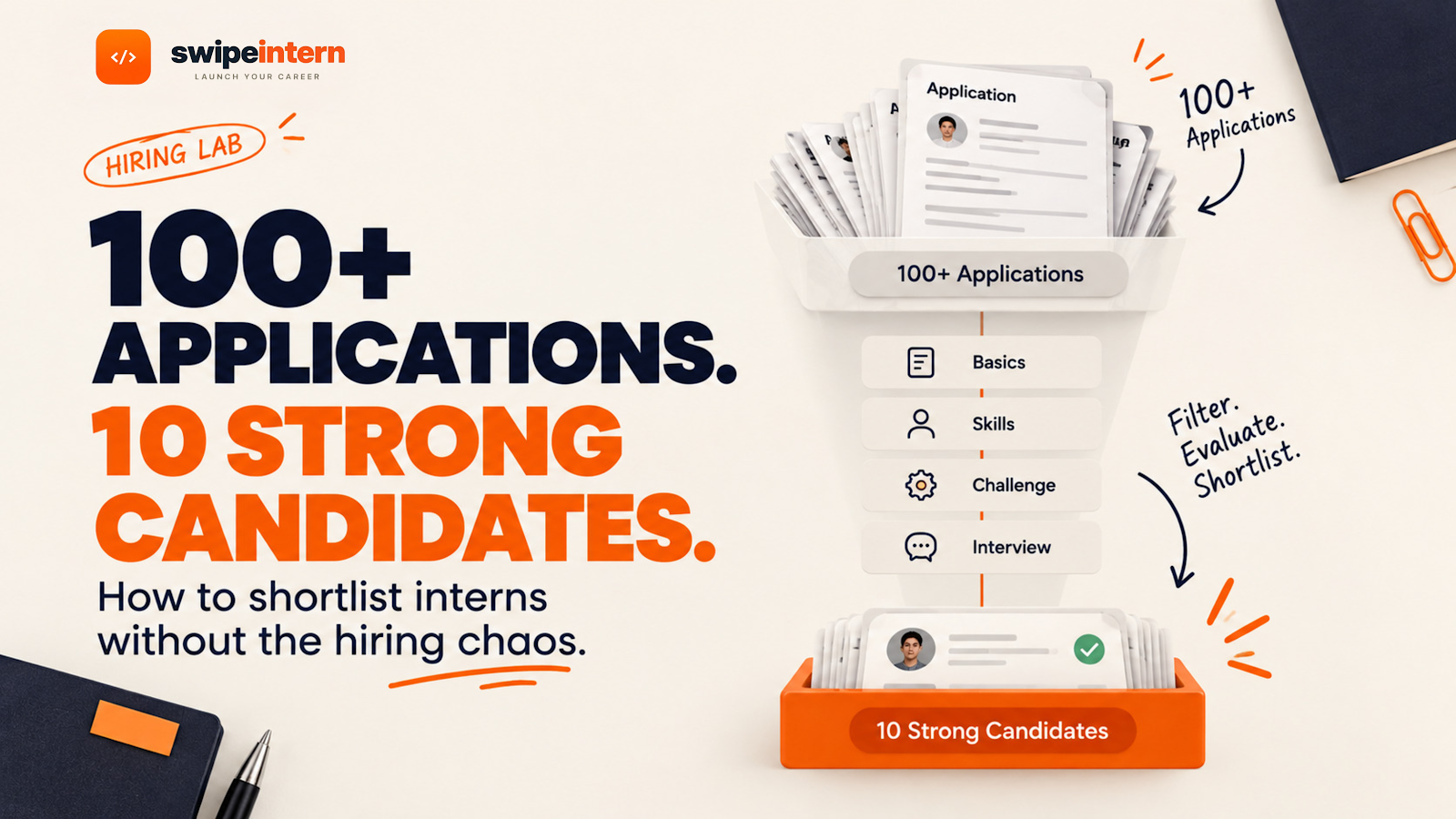
Imagine receiving 100 internship applications.
Instead of reviewing every application in the same way, move candidates through clear screening stages.
Screening stageExample remainingApplications received100Basic eligibility screening60Relevant skill and project review30Role-specific challenge15Interview evaluation10
These figures are illustrative, not actual hiring results. Your numbers will depend on the role and applicant pool.
The goal isn't to reject 90 students automatically. It's to identify a manageable group of strong candidates using consistent criteria.
5. Evaluate Candidates With a Scorecard
Hiring decisions become easier when everyone is evaluated against the same requirements.
Try this simple scorecard:
Evaluation criteriaWeightRelevant skills and projects30%Practical challenge30%Communication20%Motivation and role understanding20%
Use a consistent rating scale and record brief evidence for each score.
Adjust the weighting for each role. For example, a design internship may place greater emphasis on portfolio quality.
Remember: Evaluate job-related abilities, not personal background or irrelevant characteristics.
6. Don't Make the Hiring Process Too Long
A complicated screening process can discourage talented students from completing it.
Keep things straightforward:
Clear Job Description → Eligibility Check → Skills Review → Short Challenge → Interview → Final Selection
Tell applicants what to expect, avoid repetitive rounds, and communicate decisions promptly.
A structured hiring process respects both the recruiter's time and the candidate's effort.
7. When Should You Get Help With Intern Hiring?
For growing businesses, reviewing applications, screening resumes, and coordinating interviews can take valuable time away from core operations.
That's where a recruitment partner can help.
Swipe Intern helps businesses connect with relevant candidates through sourcing and initial screening support.
Instead of starting with a large, unfiltered application pool, employers can focus on candidates who have been reviewed against the role's requirements.
The objective is simple: Spend less time sorting applications and more time evaluating potential hires.
Final Thoughts: Better Screening. Stronger Shortlists.
You don't need to interview 100 students to find a good intern.
You need a clear role, fair screening criteria, relevant skill evidence, and a structured selection process.
Because successful internship hiring isn't about collecting the most resumes.
It's about identifying the right potential, faster.
Hiring Interns for Your Business?
Let Swipe Intern help you simplify candidate sourcing and initial screening.
100+ applications? Focus on a stronger shortlist.
Swipe Intern — Launch Your Career.